
Author: Hanss Team | Category: Renovation
Introduction
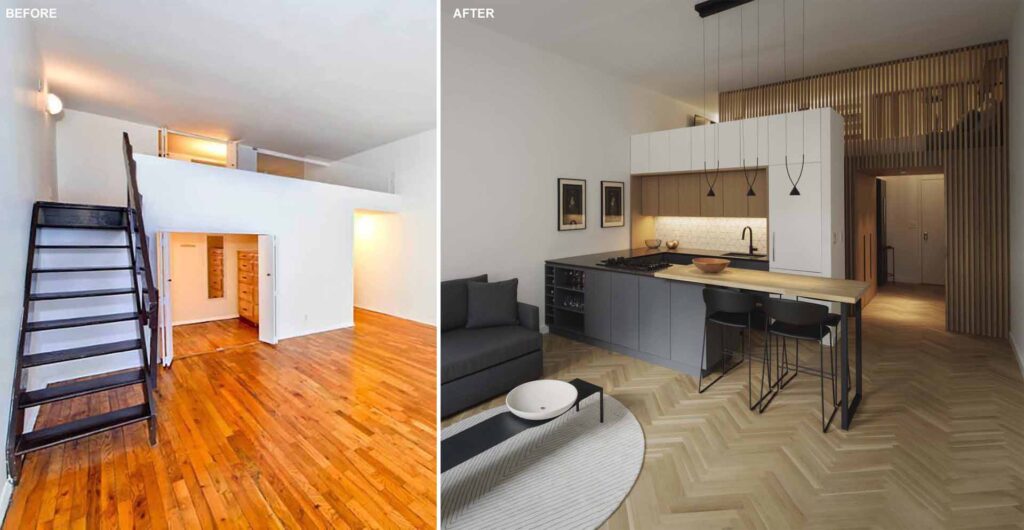
A home renovation can be an exciting experience or an exhausting one. The difference mostly comes down to planning and sticking to the right order of work. When the order is not respected, you may have to tear down and rebuild work that has already been finished.
This article walks through a professional renovation from start to finish.
Before You Start: Define the Scope and Timeline
The first question is: what do you want to change? A renovation can happen at three levels:
- Cosmetic refresh: new paint, flooring and lighting without changing the structure.
- Partial renovation: the kitchen, bathrooms and part of the installations.
- Full renovation: a new layout, replaced installations and refinished surfaces throughout.
Defining the scope and budget up front prevents constant changes during the work. We recommend setting aside a contingency reserve as well, because in renovation, hidden problems usually appear only after something is torn out.
The Right Order of Renovation Work
1. Assess the existing conditions and survey the space
Before any demolition, check the current state: plumbing, wiring, moisture, load-bearing walls and the structure. It is best to get help from a specialist for the survey and initial assessment.
2. Design and final drawings
Before starting construction work, finalize the new layout, electrical and plumbing points, finishes and materials. Deciding on paper is far cheaper than deciding during execution.
3. Demolition and preparation
Removing tiles, ceramics, old flooring and non-load-bearing walls is done with safety in mind. It is important not to damage any structural elements at this stage. Any change to load-bearing elements must be approved by a structural engineer.
4. Mechanical installations
Water and drainage piping, gas, ventilation and the heating and cooling system must be completed before the walls are closed up. A pressure test of the pipes is recommended before the wall is sealed.
5. Electrical installations
Wiring, lighting points, sockets, the distribution panel and the low-voltage system come next. The exact position of sockets and light points should match the furniture and cabinet layout.
6. Plastering and false ceilings
Once the installations are complete, it is time to repair the walls, plaster and install false ceilings. A suitable, even surface is the foundation for good paint and wallpaper.
7. Flooring
Ceramic, parquet or stone is usually installed before the cabinets and trim. Make sure the finished floor is not damaged by the heavy work that follows.
8. Cabinets, doors and interior trim
Kitchen cabinets, doors and wardrobes are made and installed with precise measurements. It is best to take final measurements after the floors and walls are finished.
9. Final painting and decoration
Final paint, light fixtures, furniture, curtains and accessories come last. Do a final cleaning of the space before placing the furniture.
Common Mistakes in Home Renovation
- Starting without drawings and a plan: constant changes drive up cost and time.
- Ignoring the installations: the best materials are pointless without sound installations.
- Choosing materials on price alone: cheap materials can be more expensive in the long run.
- Overlooking lighting: proper lighting should be considered from the design stage.
- Skipping supervision: professional supervision reduces the risk of errors during execution.
When Do You Need a Specialist?
If the renovation involves changing the layout, replacing installations or altering walls, you need a consultant and an engineer. A consultant who inspects the site, prepares accurate drawings and builds a suitable schedule helps you avoid costly mistakes. For older apartments with worn-out installations in particular, a professional opinion is essential.
Frequently Asked Questions
How long does a home renovation take?
It depends on the scope of the project, the floor area and the number of changes. A precise schedule can be set after the site visit and the scope has been defined.
Can you renovate while living in the home?
A cosmetic refresh may be possible, but for a partial or full renovation it is better for the home to be empty. Dust and noise, and interruptions to water and electricity, disrupt daily life.
Which part should the renovation start with?
With assessing the existing conditions and the installations. Hidden parts (plumbing, wiring) are fixed first, and visible parts (paint, decoration) come last.
What does the cost of a renovation depend on?
Floor area, the scope of work, the quality of materials, the condition of the building and the level of service (design, execution, supervision). An accurate estimate requires a site visit.
Conclusion
A successful renovation follows a clear path: assess the existing conditions, prepare precise drawings, demolish, install the mechanical and electrical systems, plaster, lay the floors, fit cabinets and doors, and finish with decoration. Respecting this order lowers the cost and raises the final quality.
If you have a renovation ahead and need expert advice, the Hanss team is ready to help. To see our projects, visit hanssco.com.